English - EN
 繁體 - ZH-TW
 简体 - ZH-CN
 Español - ES
 日本語 - JA
 العربية - AR
 Русский - RU
 Français - FR



資料冊全自動生產包裝機
產品分類 : 製袋機的應用
目前資料冊製程中,大多採用人力進行黏合包裝,因應工業4.0生產自動化,開發資料冊自動黏合機及資料冊自動包裝機,在資料冊的製程中採用自動控制、自動調整裝置,以取代人力,達到更穩定的生產品質,並在提升產值同時增加競爭力。 雙重機台彈性配置 世鋼獨家研發機台結構創新設計,提供資料冊、資料袋產線更靈活的運用,可以單機使用,也可以配置自動包裝機,從入料到成品,可在全自動的生產線上完成,節省人工成本,增加產能。 資料冊生產製袋機 全自動伺服馬達控制封切機設計,可高速生產及黏合資料夾,搭配伺服馬達電腦控制,訂本位置準確不易跑位。智慧系統在運轉過程中全程監控,發現異常時立即停機警示,提供高效又安全的資料冊內頁製袋機及資料冊黏合生產線。 資料冊全自動生產及包裝專用機 所有工序由程式自動化控制,可以透過操控面板進行設定,在資料冊、資料袋大批量產前,只需要在操控面板上設定參數,即可一鍵啟動,一次完成多道工序 ,自動化設定後可降低人力操作,自動輸送、點數功能,有效節省人力,提升整廠自動化整合。

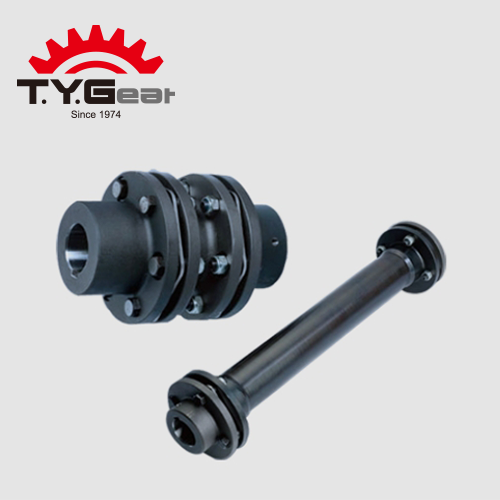
鋼片聯軸器
產品分類 : 傳動、電機與驅動系統及齒輪
(1) NO-LUBRICATION REQUIRED: No lubricants are needed and no noises or wear and tear produced because there is no sliding or friction. (2) MAINTENANCE-FREE: ”LEAVE IT FOR GOOD AFTER INSTALLATION” It lasts forever as long as is used correctly. (3) LIGHT WEIGHT W/HIGH TORQUE: By operations, it is available in a wide range; it can be made of aluminum alloy to reduce the weight. (4) LARGE OFF-CENTER ALLOWED: With large range of off-centering, it can be used flexibly in all kinds of transmission systems. (5) SUITS HIGH-TEMPERATURE APPLICATIONS: All-metal-pars construct makes it suitable for high temperatures. (6) BACKLASH-FREE: WITH GOOD TORSIONAL RIGIDITY Perfect for axial rotation that requires accuracy and machines with phase-control. (7) CAN BE USED IN EVEN HIGHER SPEEDS: It is highly balanced due to being backlash-free and light weight. (8) EASY TO INSTALL: Comprising small number of pasts and being compact, it can be installed/uninstalled quickly. (9) ROBUST STRUCTURE AND HIGH SAFETY COEFFICIENT: With load stress kept at low standard, it works with very high safety coefficient. (10) AUTOMATIC PROTECTIVE DEVICE: In case of damage, an automatic protective device rotates via pads.




粉碎機&磨粉機整套設備
產品分類 : 破碎、粉碎與減積設備
適用產品範圍:高/低聚乙烯,軟/硬質PVC,聚丙乙烯,聚苯乙烯,聚醯胺,聚合物,含氯聚合物各式聚合物,人造橡膠及其他。 磨粉尺寸:從0.1mm至2mm 性質極佳流暢之粉末。









乳膠避孕套浸漬機-JB-CD
產品分類 : 橡膠浸漬機
Condom manufacturing machine process Collecting the raw materials Rubber latex is obtained from the milky fluid produced by various tropical plants. Latex is actually an emulsion or dispersion of tiny rubber particles in water, and ingredients added to the latex must be able to attach to the rubber particles during compounding. Compounding Next, chemical additives are mixed to form a paste. This paste is then blended with the liquid latex in a process called compounding. Storage The latex and chemical compound is then unloaded into drums for storage, where it remains for approximately seven days. During this period, vulcanization chemically strengthens the bonds of the rubber. The storage time also allows any air, which might have been trapped in the mixture during compounding, to escape. Dipping The compound is then added to the dipping or condom-forming machine. The dipping machine is a long, hooded machine approximately 100 feet (30.5 m) in length. Thick tempered glass rods move along a closed belt between two circular gears. The belt drags the rods, which are called mandrels, through a series of dips into the latex compound. The mandrels rotate to spread the latex evenly. Several coats are required to build the condom to its required thickness. Between each dip, the latex is hot air dried. After the final dipping and drying, the condoms automatically roll off the mandrels. A machine shapes and trims the ring of latex at the base of each condom. Tumbling Next, the condoms are put in a tumbling machine, where they are coated with talc or another similar powder to prevent the rubber from sticking to itself. Testing After a curing period of several days, the condoms are sampled by batch and tested for leaks and strength. The first such test is the inflation test, in which the condom is filled with air until it bursts. Condoms are required to stretch beyond 1.5 cubic feet, about the size of a watermelon, before bursting. This test is considered most important because the elasticity of the condom keeps it from tearing during inter-course. In the water-leakage test, the condom is filled with 10 ounces (300 ml) of water and inspected for pin-sized holes by rolling it along blotter paper. Condoms are also tested electronically. This involves mounting each condom on a charged stainless steel mandrel. The mandrel is passed over by a soft, conductive brush. If pin holes are present, a circuit will be established with the mandrel, and the machine will automatically reject the condom. Packaging Condoms that have successfully passed these tests are rolled by a machine. Rolling the condom makes it easier to package and use. Lubricant and spermicide may be applied by a metering pump just before the top wrap is added in the foiling process.