


 English - EN
  繁體 - ZH-TW
  简体 - ZH-CN
  Español - ES
  日本語 - JA
  العربية - AR
  Русский - RU
  Français - FR
PLASTAR Automatic Air Ring Helps Control Film Thickness Before It Becomes Waste
A practical thickness-control solution for multi-layer blown film producers
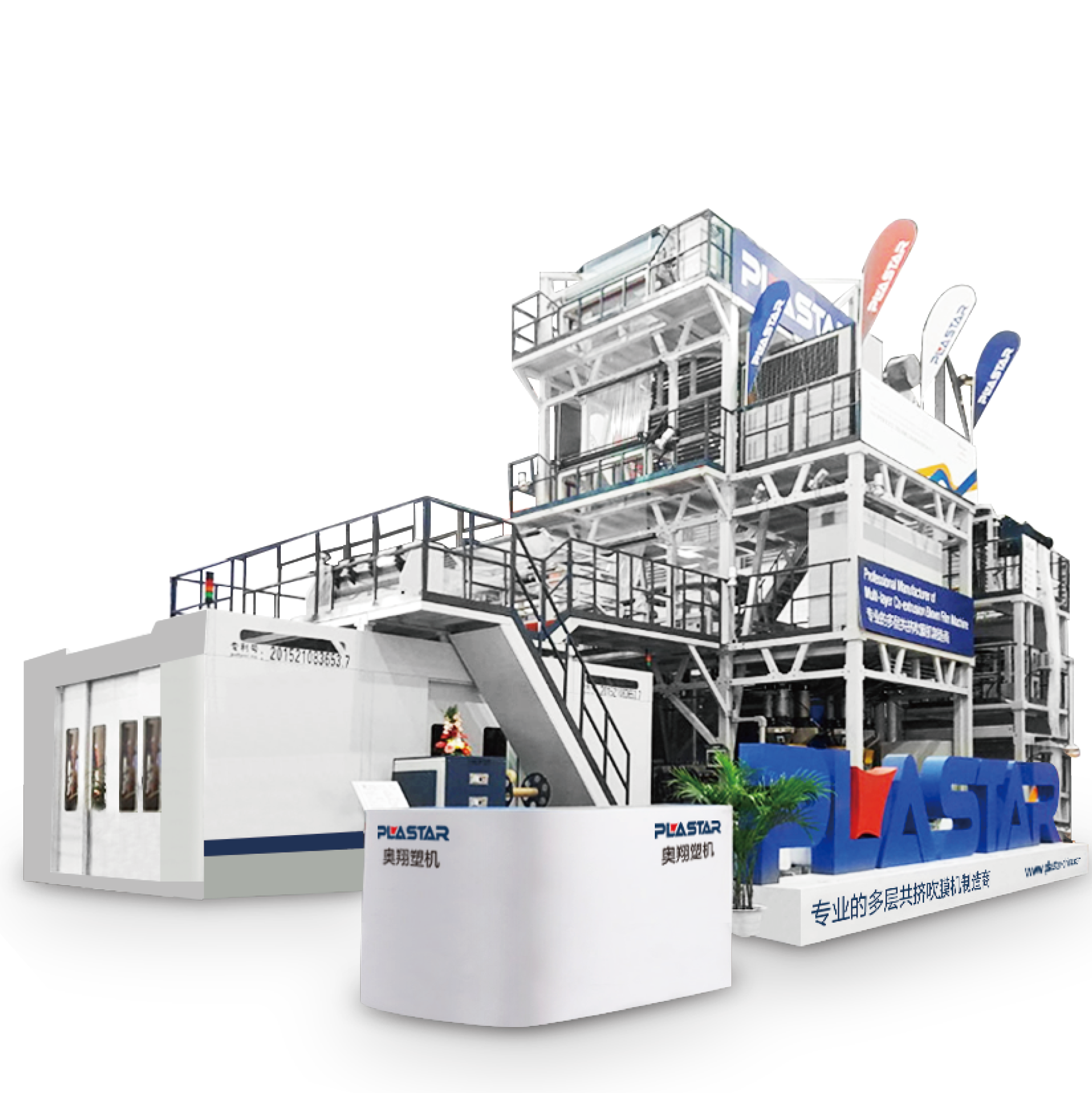
Image position: PLASTAR 5-7 layer co-extrusion blown film line or automatic air ring/gauge control detail.
| Production Pain Point | PLASTAR Solution | Customer Value |
| Cross-direction thickness variation raises scrap, adds manual adjustment and affects printing, lamination and barrier film stability. | A patented dual-motor edge-tracking automatic air ring with 120 independent control units and gauge feedback control. | More stable thickness, less start-up waste, better roll quality and stronger repeatability in multi-layer film production. |
Submission Article
In blown film production, thickness variation is often where hidden cost begins. It is not only a number on a quality report. It affects resin consumption, winding quality, printing registration, lamination stability and the customer's confidence in every roll delivered. For producers of food packaging, composite film, printing film and shrink film, unstable cross-direction thickness can quickly turn into wasted material, longer adjustment time and avoidable production cost.
This is why PLASTAR places automatic air ring and gauge control at the center of its multi-layer blown film solution. Output and layer structure matter, but daily production depends on whether the line can keep the bubble stable and the film thickness consistent during long operating cycles. The purpose of automation is simple: reduce dependence on manual air adjustment and make quality repeatable from one roll to the next.
PLASTAR's automatic air ring system is designed to address cross-direction thickness variation at the cooling stage. According to PLASTAR's technical configuration, the system adopts a patented dual-motor edge-tracking automatic air ring, Patent No. ZL 2024 1 1087285.7, with 120 independent control units for precise sectional air-volume adjustment. Instead of relying on broad manual correction, the air ring can respond more accurately around the film bubble.
The system works together with a rotating scanning thickness gauge, central control system, controller, display, drivers, motors and air-outlet position detection. During production, the gauge reads film thickness distribution and the control system adjusts the cooling air accordingly. This closed-loop approach helps control the cross-direction thickness profile, while machine-direction stability is supported by stable extrusion and haul-off control.
For 5-layer and 7-layer films, this control becomes even more important. Multi-layer structures often combine sealing layers, mechanical layers, barrier layers and surface layers. When the thickness profile is unstable, the problem may affect more than appearance. It can influence barrier reliability, roll flatness, downstream printing or lamination performance, and the converter's ability to meet customer specifications.
PLASTAR's technical material states that the automatic air ring and gauge control system can improve film uniformity and target film thickness precision up to +/-3 per mille under suitable operating conditions. The same system is positioned to support a 10%-15% capacity improvement by helping the line run more stably and reducing unnecessary adjustment during production. Actual results depend on film structure, resin formulation, operating speed and production conditions.
Energy and maintenance are also part of the design logic. Compared with conventional cooling solutions, PLASTAR positions this system as a lower-cost and easier-maintenance solution, with lower cooling-energy demand and a simpler service profile than many traditional alternatives. Actual savings depend on the customer's power price, running hours and product mix, but the operating logic is straightforward: more stable control usually means less waste and fewer unnecessary corrections.
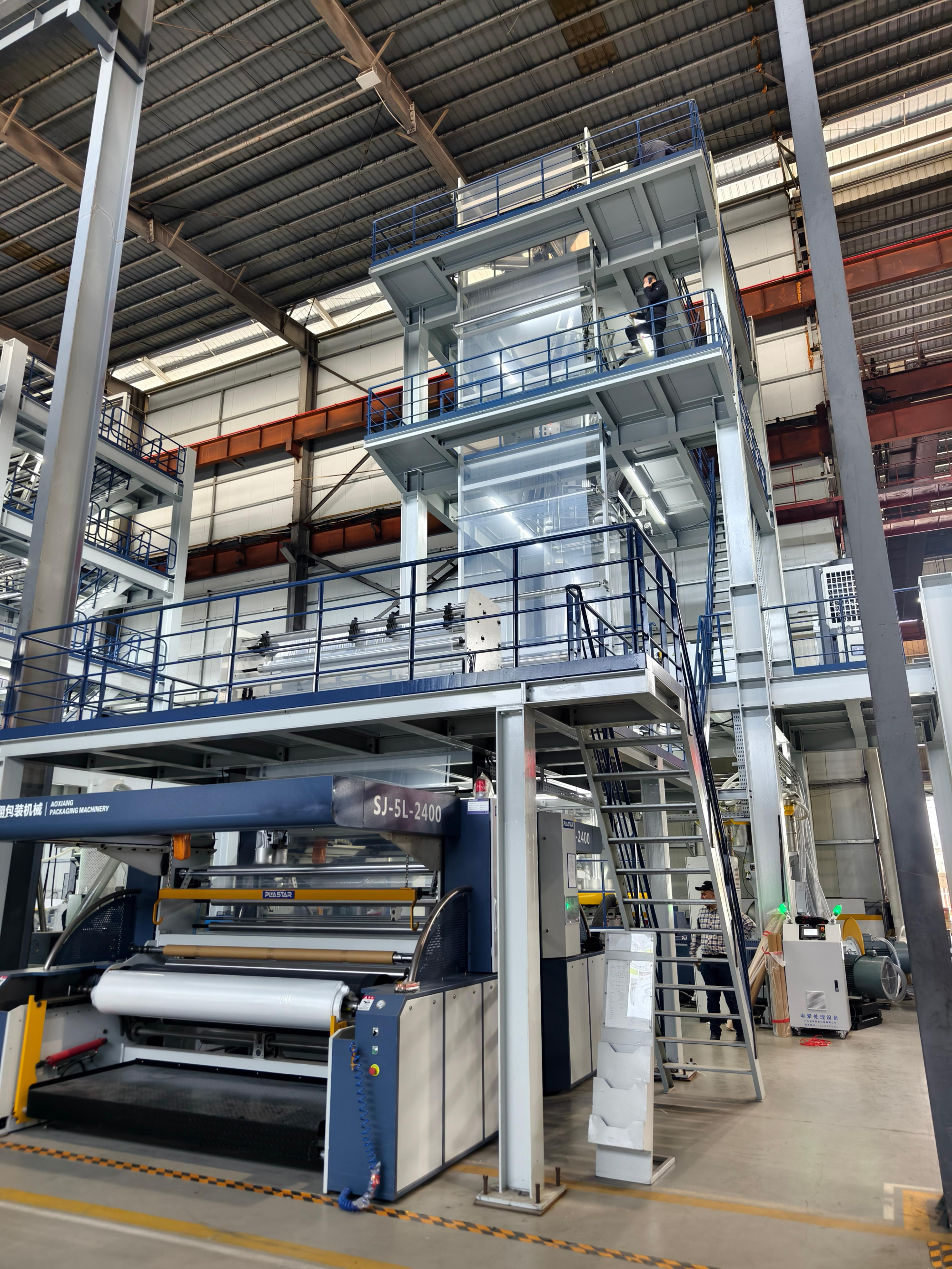
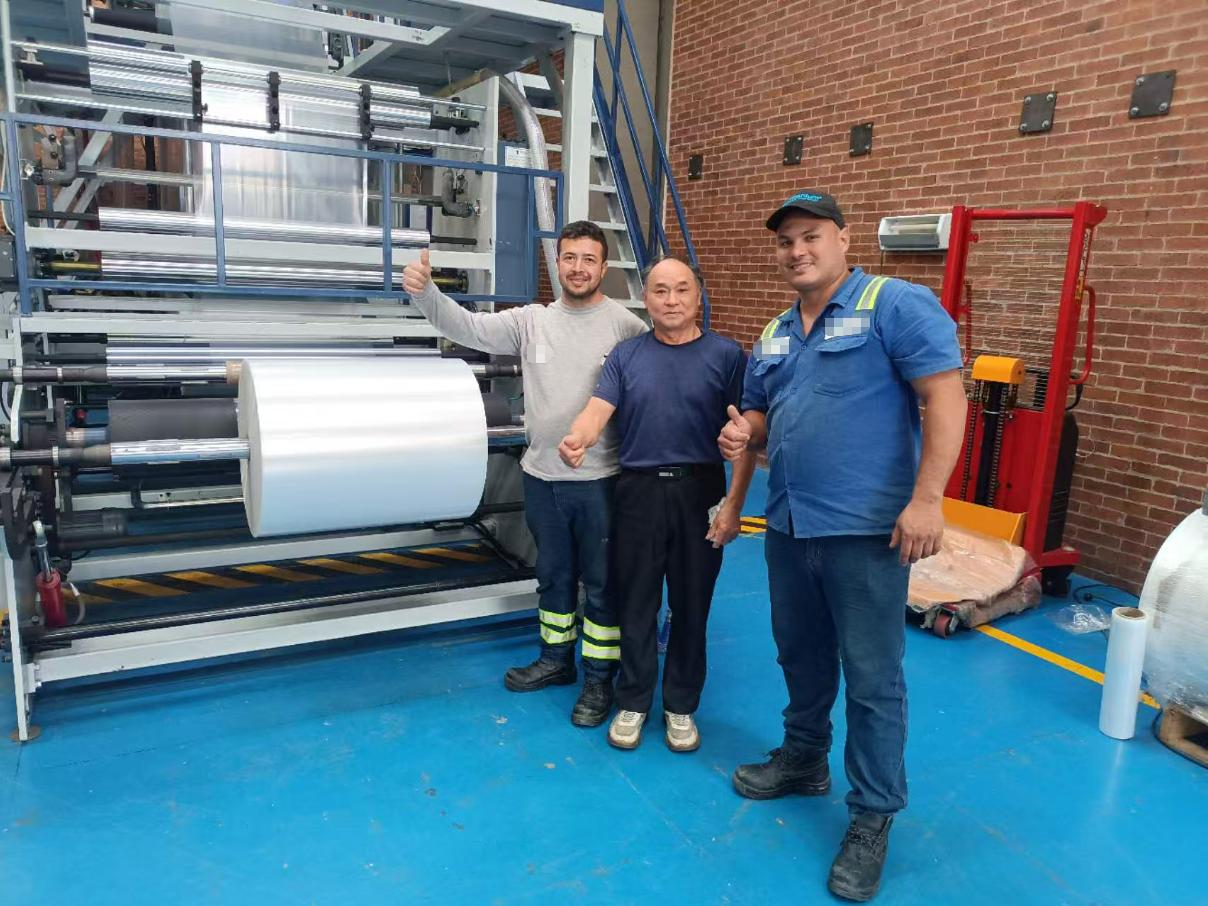
In practical applications, the value of thickness control becomes clearest when the film is used for higher-requirement products. In Jordan, a 2400 mm five-layer PLASTAR blown film line was configured for composite film and printing film production, where roll consistency and downstream converting performance are critical. For shrink film applications in Chile and Iran, three-layer lines equipped with automatic air ring and thickness measurement were selected to support stable bubble control and more reliable film output. These projects show that thickness control is not an optional decoration; it is tied to real production requirements.
For converters, the business meaning is direct. Better thickness control can help reduce scrap, improve roll quality, stabilize downstream processing and protect resin cost. It also gives producers more confidence when developing higher-value film structures instead of competing only on basic film price. In a market where customers expect thinner, stronger and more consistent packaging, process control can become a real competitive advantage.
PLASTAR continues to develop blown film lines as integrated production systems from the die to the winding section. By combining precision co-extrusion, automatic air ring control, gauge feedback and practical engineering support, PLASTAR helps packaging manufacturers build more stable, more efficient and more profitable film production for demanding flexible packaging applications.




合作媒體