


 English - EN
  繁體 - ZH-TW
  简体 - ZH-CN
  Español - ES
  日本語 - JA
  العربية - AR
  Русский - RU
  Français - FR
PP Sheet Extrusion Line: Where to Look When Tray Forming Goes Wrong
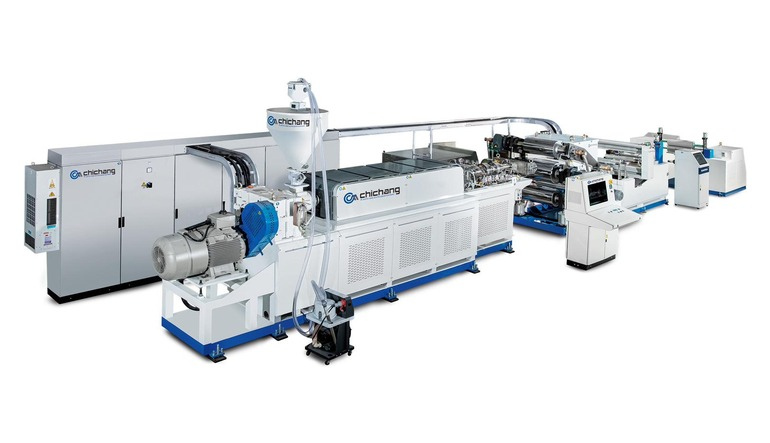
The sheet is finished on your line. It passes or fails on someone else's.
A roll of sheet comes off your PP sheet extrusion line. Thickness checked, surface checked, everything looks fine. The real test happens at your customer's plant, when that sheet is heated, formed, and trimmed into food trays. If one corner comes out too thin, if this batch looks hazier than the last, or if the web keeps drifting to one side, the sheet is one of the first things that gets checked.
When you evaluate a line, ask something more useful than "what's the output?": which section controls the problems your customer actually sees? On a typical line, the melt passes through the extruder and flat die, is cooled into sheet on the roll stack, then edge-trimmed, slit, and wound or cut to size. Three common problems come first, each traced back to the line, followed by a note on multilayer structure.
1. Thin corners and uneven forming: where thickness drifts on a PP sheet extrusion line
In thermoforming, the heated sheet is drawn into the mold. The corners and deepest points of a tray already stretch the most and tend to come out thinnest. Uneven sheet thickness makes the wall-thickness variation in the formed tray worse, because thicker and thinner areas soften differently under heat. PP usually has a narrower thermoforming temperature window than amorphous materials like PS, so PP sheet is less forgiving of thickness variation.
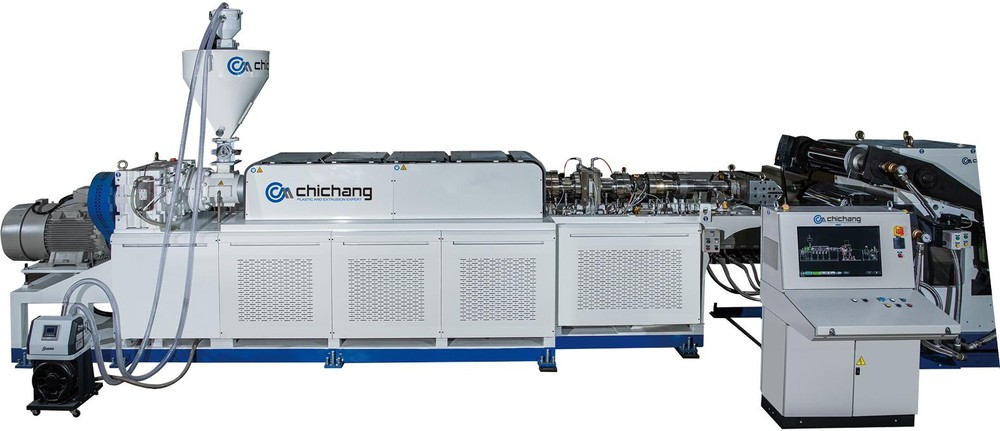
Thickness varies in two directions. Across the width, it depends mainly on how the die distributes the melt. Along the machine direction, it often comes from pressure and output fluctuations at the extruder, and from how stable the roll gap and line speed are. Many lines add a gear pump between the extruder and the die to reduce those fluctuations and deliver a steadier flow.
2. Clarity and stiffness that change batch to batch: roll stack cooling affects crystallinity
PP is semi-crystalline. When the melt leaves the die and meets the roll stack, how fast and how evenly the sheet cools affects its crystalline structure, and that shows up in clarity, stiffness, and how the sheet behaves when your customer heats it for forming. Clarifiers and nucleating agents in the formulation matter too, but they are set before the resin reaches the line. On the line, roll temperature, roll speed, and how the sheet contacts the rolls are what the sheet producer controls every day.
Same formulation, unstable roll stack: the sheet can come out different from one batch to the next.
3. Web drift and feeding problems: trimming, slitting, and winding
Thin sheet for food trays is usually fed to the thermoformer from a roll. Flatness, edge quality, slit width, and consistent winding tension all decide whether that roll feeds smoothly from start to finish. Heavier-gauge sheet is often cut into individual sheets for sheet-fed forming machines.
After the roll stack, Chi Chang's sheet lines can be configured with an edge trimming and slitting unit, followed by a winder or a computer-controlled cutting unit, to deliver rolls or cut sheets depending on how your customers form.
4. Multilayer structure: skin and core can be formulated separately
Chi Chang's sheet extrusion systems run monolayer or coextruded multilayer sheet with up to 5 layers. Multiple layers let you formulate the skin and core separately, for example a skin layer for appearance and gloss, and a core layer tuned for stiffness or material cost. Which material can go in which layer depends on the end use, and food-contact trays must also meet food-contact regulations in the market where they are sold. The sheet producer and the brand owner need to confirm that together.
Over 50 years in extrusion
Chi Chang was founded in Tainan in 1972, and film and sheet extrusion have been at the center of its work ever since. It began exporting to Southeast Asia in 1974, expanded into the Americas, Africa, and Oceania, and entered the German and wider European market in 1996, as the first Taiwanese company to export an extruder to Germany.
Its sheet lines can process PP, PE, ABS, HIPS, PET, PC, PMMA, and other thermoplastics, for applications from food trays to stationery accessories. The materials and applications vary widely. What the customer checks during forming does not: whether the sheet behaves the same in every section and every batch.
FAQ
How many layers can a PP sheet extrusion line produce?
Chi Chang's sheet extrusion systems run monolayer or coextruded sheet with up to 5 layers. The number of layers and the layer ratio are planned around the end product.
Can the same line also run PET or HIPS sheet?
Not necessarily; it depends on the model and configuration you choose. Chi Chang lists PP, PE, ABS, HIPS, PET, PC, and PMMA among the materials its sheet lines can process, but each material has different requirements for screw design, temperature control, and material preparation. PET, for example, typically requires drying with dehumidified air before extrusion. If you plan to run more than one material, share the full material list at the planning stage so the engineering team can assess a suitable configuration.
Should the sheet be wound or cut into sheets?
It depends on how your customers form: roll-fed thermoformers use rolls, and sheet-fed machines use cut sheets. Whether the line ends in a winder or a cutting unit can be discussed with Chi Chang when you plan the line.
Evaluating a PP sheet extrusion line? When you reach out, two things are enough to start: what the sheet will become (for example food trays or stationery accessories), and whether your customers form from rolls or cut sheets. Chi Chang's engineering team will discuss a suitable layer structure, extruder size, and downstream configuration with you from there → See Chi Chang's PP Sheet Extrusion Line


合作媒體