


 English - EN
  繁體 - ZH-TW
  简体 - ZH-CN
  Español - ES
  日本語 - JA
  العربية - AR
  Русский - RU
  Français - FR
近期更新 立即訂閱
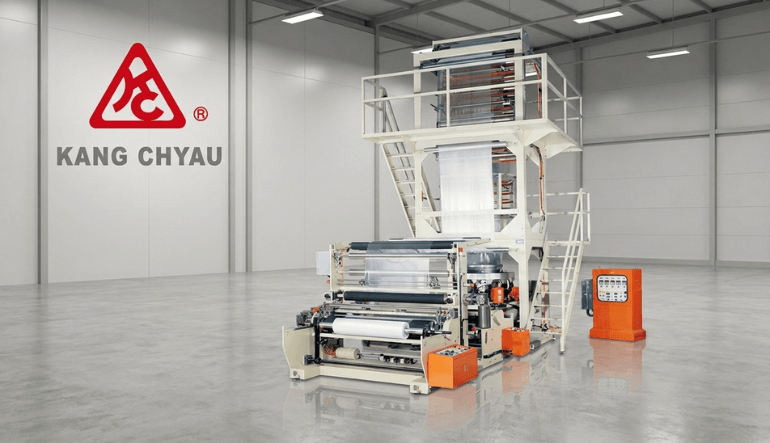
從「人盯機台」到「機台自己調」:康喬工業把 AI 控制與 ERP 整合帶進四槽計量吹膜設備
在吹膜這一行,機台好不好用,很多時候不是看主機馬力多大,而是看進料穩不穩、配比準不準、師傅在不在。成立於 1988 年的康喬工業(KANG CHYAU INDUSTRY CO., LTD.),累計出貨超過 8,000 台吹袋機、銷往全球 62 個國家,最近把研發重心放在一個很務實的方向:讓機台自己把這些「憑經驗」的事情做掉。
原料價格坐雲霄飛車,你的產線跟著晃嗎?
這幾年原料價格本來就像坐雲霄飛車,2026年8月更是沒有例外。中東地緣政治緊張局勢近期再度推升全球聚合物價格,今天報的價格,明天可能就失效了。第一季還撐得住毛利的配方,到了第三季可能就開始吃掉利潤。一條高度仰賴原生料的產線,等於把自己的財務穩定,直接綁在原油衝擊、船運波動跟供應商配額這些完全不受膜廠控制的因素上。
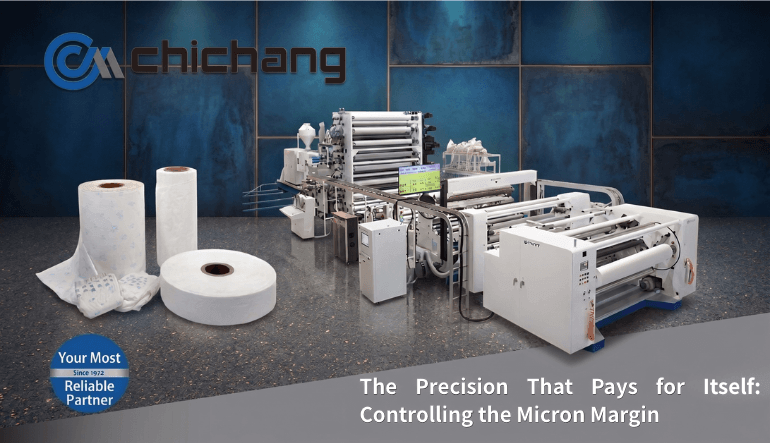
Breathable, Yet a Liquid Barrier: What to Know Before Evaluating a PE Breathable Film Line
PE breathable film is a polyethylene film with micron-scale pores throughout: water vapor passes through, while liquid water is held back under the designed pressure conditions. In baby diapers and sanitary napkins, a liquid-barrier outer layer that can still release moisture vapor, thanks to its microporous structure. Chi Chang’s listed applications also include masks and surgical gowns; actual use depends on the product’s construction and regulatory requirements.
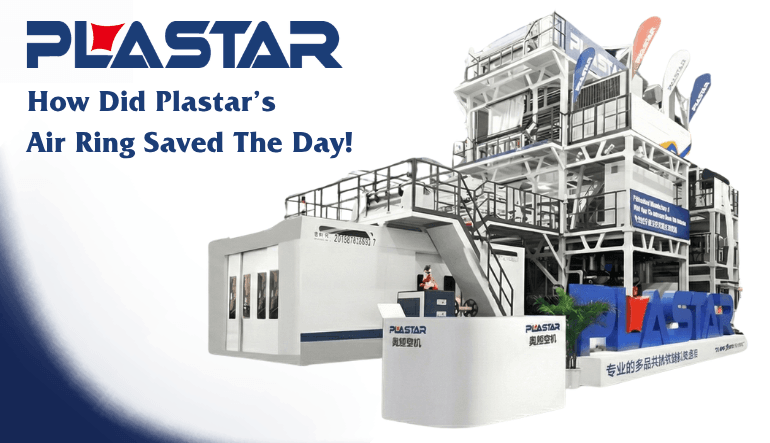
PLASTAR Automatic Air Ring Helps Control Film Thickness Before It Becomes Waste
In blown film production, thickness variation is often where hidden cost begins. It is not only a number on a quality report. It affects resin consumption, winding quality, printing registration, lamination stability and the customer's confidence in every roll delivered. For producers of food packaging, composite film, printing film and shrink film, unstable cross-direction thickness can quickly turn into wasted material, longer adjustment time and avoidable production cost.
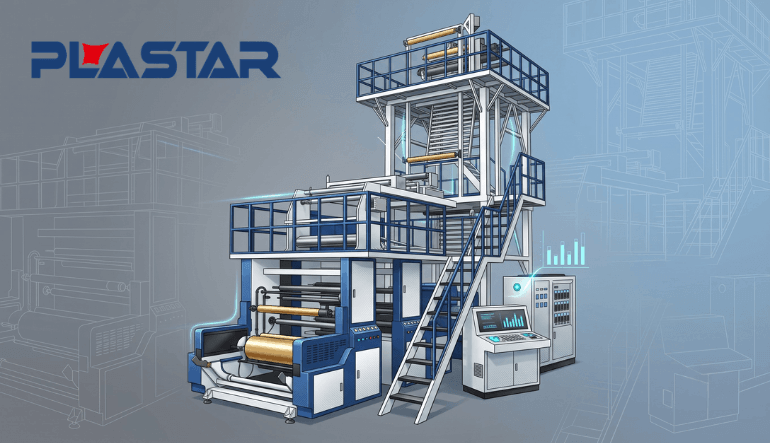
PLASTAR Launches Advanced Five-Layer Co-Extrusion Blown Film Production Line
The intelligent automatic air ring achieves ±3‰ thickness accuracy, reduces the scrap rate by more than 3%, and increases production capacity by 10%–15%. Soaring energy costs and strict recycling requirements under the EU PPWR framework are reshaping the European packaging industry, driving global demand for more energy-efficient and material-saving blown film production systems. Converters are increasingly turning to recyclable, downsized, multi-layer structures to lower their carbon footprint and stabilize operating costs.
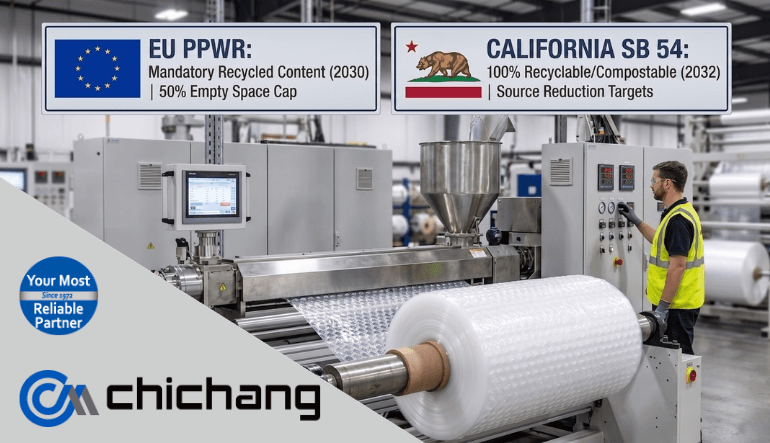
法規沒點名氣泡布,但你的客戶已經開始問了
翻開這兩年最常被討論的兩部包裝法規——歐盟 PPWR 和加州 SB 54——你找不到「氣泡布」三個字。被點名的是茶包、生鮮標籤、極輕量購物袋;上新聞的是可堆肥材料和回收率目標。做保護性包裝的廠商,似乎可以鬆一口氣。採購單上的新欄位說不行。愈來愈多出口導向的包材廠發現,品牌客戶的詢價單開始多出幾個過去沒有的問題:這款氣泡膜能不能降厚?含多少比例的再生料?單一材料嗎、進得了回收流嗎?法規沒有點名氣泡布,但它塑造的採購標準,正一路傳到緩衝材的產線上。
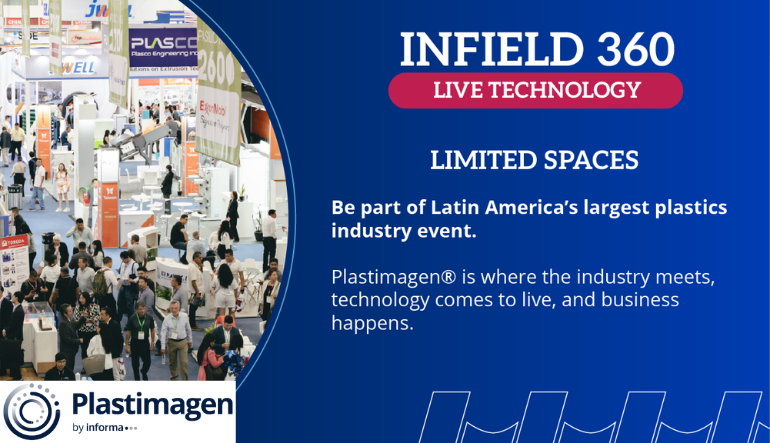
Discover the latest English promotional updates for the Plastimagen exhibition
Be part of Latin America's largest plastics industry event. Plastimagen is where the industry meets, technology comes to live, and business happens. Book Your Space Today! Great opportunities don't always come back. This one is still open.
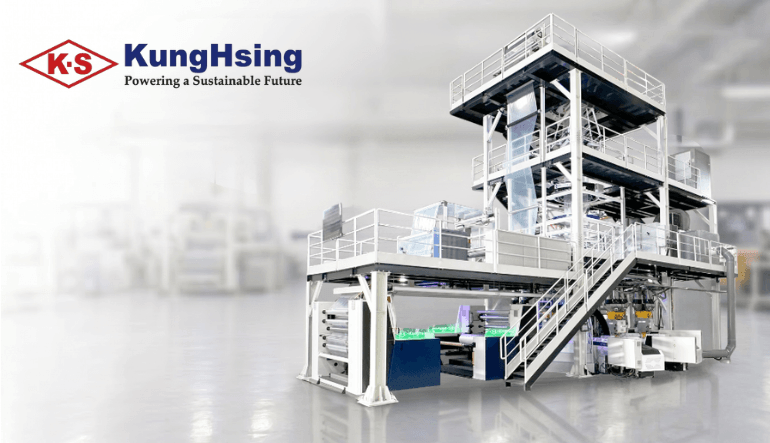
The Rise of Mono-Material Packaging: Why All-PE Solutions Matter for the Future of Flexible Packaging
The global packaging industry is undergoing a significant transformation. Driven by evolving regulations such as the European Union's Packaging and Packaging Waste Regulation (PPWR), as well as aggressive sustainability commitments from leading global consumer brands, packaging design is shifting from a performance-first approach toward a recyclability-first strategy.
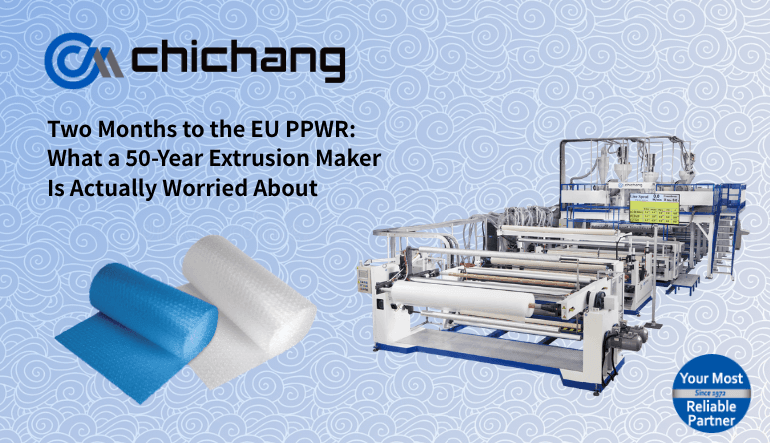
Two Months to PPWR: What a 50-Year Extrusion Maker Is Actually Worried About
In under two months, the EU's Packaging and Packaging Waste Regulation (PPWR, 2025/40) reaches its General Application Date on August 12, 2026. The date has circulated in plastics-packaging circles for nearly two years, but with only two months remaining, the level of tension across the industry is markedly different from the earlier, more relaxed "there's still time" phase.
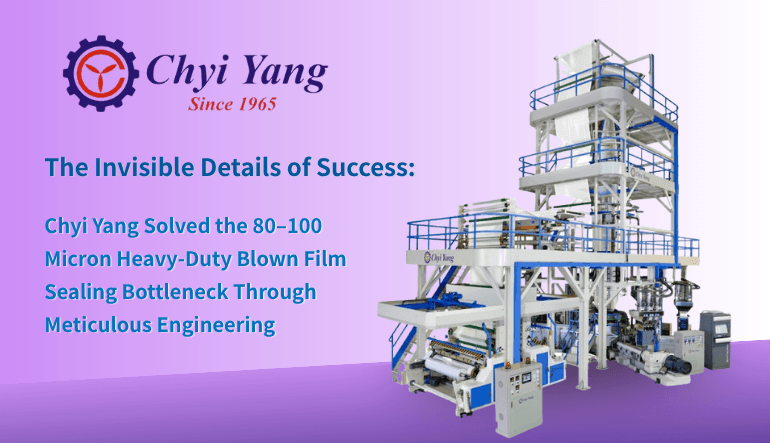
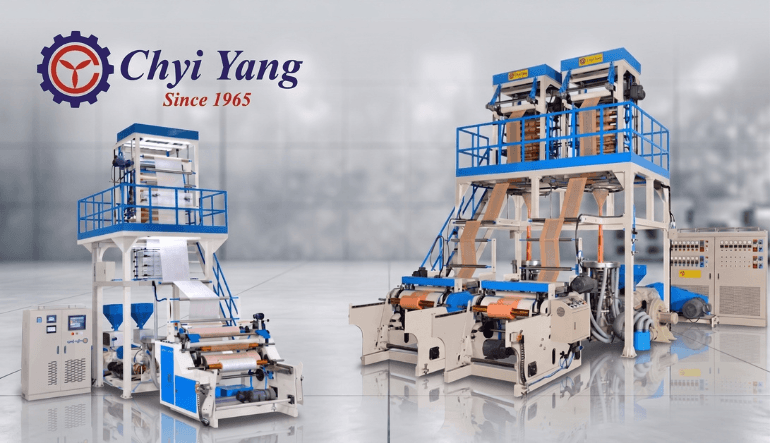
The Invisible Details of Success: How Chyi Yang Industrial Solved the 80–100 Micron Heavy-Duty Blown Film Sealing Bottleneck Through Meticulous Engineering
In my twenty years covering the global plastics and rubber machinery industry, I have heard countless manufacturers boast about their blazing extrusion speeds or staggering output figures. The true trial of any machine begins the moment it hits the factory floor and the power switch is flipped.
The 2030 PPWR Countdown: How PLASTAR Beats the "Sustainability Output Tax"
The last 18 months changed how European converters spec a new line. PPWR begins applying on Aug 12, 2026. Minimum recycled-content thresholds tighten toward 2030. EN 13432 sets the compostable bar. PCR pressure builds across every packaging category — contact-sensitive applications included.
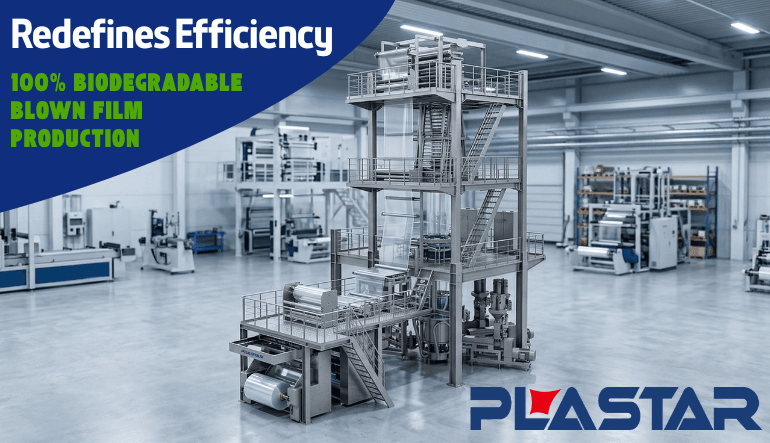
Debunking the Output Myth: How PLASTAR Redefines Efficiency in 100% Biodegradable Blown Film Production
For years, a persistent myth has circulated within the packaging industry: "Going 100% biodegradable means losing 20% of your output." At the recent CHINAPLAS 2026, this was the most frequent concern raised by manufacturers. The transition to PLA, PBAT, and starch-based blends is often associated with technical headaches—bubble instability, thickness variation, and significant downtime.